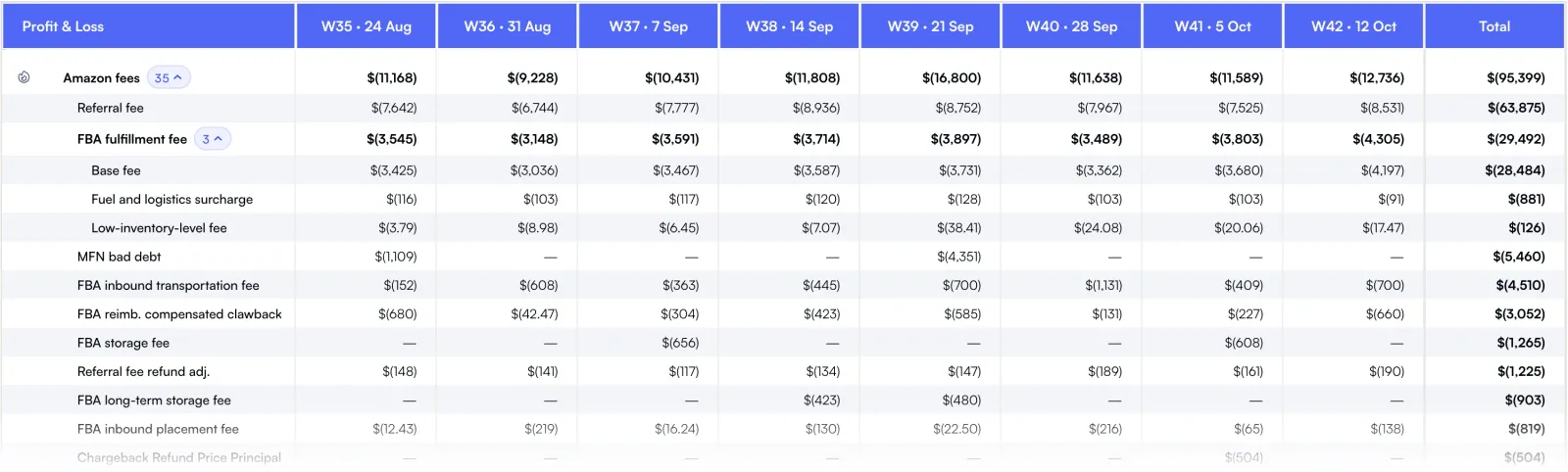
Amazon FBA in 2026 isn't what it was three years ago. Rising PPC costs, tighter inventory limits, and algorithm updates mean the "launch and hope" approach is dead. Today's successful sellers operate like data companies that happen to sell products. They track every margin point, test methodically, and build systems that compound over time. The plateau usually shows up first in lax measurement of the items below; the symptoms come later.
Opening the Amazon fee lines makes the costs behind your margin visible.
This guide shows you how to launch and scale an Amazon FBA business using the frameworks that work now: smart tools, advanced analytics, and strategic thinking. With sustainable business practices, you can build a profitable operation that grows year after year.
Why 2026 is a turning point for Amazon sellers
Three forces are reshaping Amazon FBA: advertising is now a structural cost line rather than a launch expense, inventory placement and storage charges swing hard with the calendar, and customer acquisition needs multi-channel thinking. Advertising and Amazon's total take are both large enough that a point of margin lost on either shows up in the year-end P&L. The sellers who thrive treat these as filters that separate systematic operators from guessers.
Advanced advertising
Rising PPC costs demand surgical bid management and query-level optimization.
Amazon FBA (Fulfillment by Amazon) remains the cornerstone of e-commerce success, but 2026 has brought significant updates that every seller must understand. From revised fee structures to enhanced automation capabilities, the landscape has evolved to favor data-driven, strategically-minded sellers.
What FBA delivers in 2026
Hands-off fulfillment: Amazon handles storage, packing, and shipping
Prime eligibility: Access to millions of Prime customers with fast shipping
Customer service: 24/7 support handled by Amazon's team
Returns management: Automated returns processing and refunds
Step-by-step guide to starting with FBA in 2026
Follow this proven framework to launch and scale your Amazon FBA business successfully. Each step builds on the last, creating a systematic approach to profitable growth.
1. Product research & validation
Successful product research in 2026 uses smart tools and advanced analytics to identify profitable opportunities while minimizing risk. Focus on products with consistent demand, reasonable competition, and strong profit margins after all fees.
Research essentials
Use data to identify underserved niches with strong demand
Analyze competitor strategies, pricing, and customer reviews
Calculate all costs including FBA fees, PPC, and shipping (the free Amazon FBA calculator handles this in under a minute per ASIN)
2. Setting up your seller account
Account setup has become simpler in 2026, but thorough preparation ensures faster approval and better performance. The Professional plan ($39.99/month) is recommended for serious sellers planning to sell more than 40 units per month.
Worked example
Take a new kitchen brand that spends its first week getting Brand Registry approved before launching a single product. That unlocks A+ Content, Brand Analytics and IP protection from day one, so the first campaign runs with creative and search data that an unregistered seller cannot touch. The sequencing costs a week and saves months of remediation.
3. Listing optimization & SEO
Amazon's search ranking weighs conversion and customer satisfaction alongside keyword relevance. Focus on compelling product titles, detailed bullet points, and high-quality images that convert browsers into buyers.
Optimization checklist
Identify high-volume, relevant search terms for your product
Invest in professional photography with lifestyle shots
Add A+ content, which gives you space to answer objections that bullets cannot
4. Operations & fulfillment
Tight operations and smart automation prevent issues while maximizing efficiency. Focus on data accuracy and process optimization to scale profitably.
Worked example
Take a supplements seller who sets reorder points from 90-day sales velocity rather than a fixed monthly order. Holding 60 days of cover instead of 120 halves the cash tied up in stock, and that cash is what funds the next product launch. The arithmetic is simply units per day multiplied by days of cover multiplied by landed unit cost.
Marketing & growth strategies in 2026
Modern Amazon marketing requires a multi-channel approach combining PPC advertising, SEO optimization, and external traffic generation. Success depends on understanding customer behavior and optimizing every touchpoint in the buyer journey.
PPC optimization has become increasingly complex, requiring sophisticated bid management and creative testing. Advanced PPC strategies can help you stay ahead of rising costs and maintain profitability.
Sponsored Products
Target high-intent keywords to capture ready-to-buy customers
Sponsored Brands
Build brand awareness and showcase your product portfolio
Display Ads
Retarget interested customers across Amazon and beyond
Data & analytics: the 2026 advantage
In 2026, successful Amazon sellers rely on comprehensive analytics platforms to make informed decisions that drive growth and profitability. Advanced analytics capabilities have become table stakes for competitive operations. The difference between guessing and knowing shows up in every P&L line.
Nova Analytics Advantage
Nova Analytics provides the comprehensive platform that modern sellers need to thrive. From real-time sales monitoring to predictive analytics and competitive intelligence, Nova delivers actionable insights that directly impact your bottom line. Perfect for data teams and executives who need reliable metrics.
Faster data refresh rates for near real-time decisions
The most successful Amazon sellers in 2026 think beyond quick wins. They focus on building sustainable businesses that can weather market changes, competitive pressures, and platform updates.
This requires strategic planning, operational excellence, continuous adaptation to market conditions, and creating defensible competitive moats that protect market share. Learn sustainable business strategies that compound over time.
Common mistakes to avoid in 2026
Poor data management
Inaccurate data leads to wrong decisions and missed opportunities
Reviews drive algorithm rankings and buyer decisions
Lack of analytics
Data-driven decisions consistently outperform gut instincts
The future of FBA beyond 2026
Looking ahead, Amazon FBA will continue evolving with smart repricing, predictive demand forecasting, and enhanced supply chain transparency. Sellers who embrace these technologies and build resilient, data-driven operations will be best positioned for long-term success. Explore Nova Analytics' full suite of tools designed for modern Amazon sellers.