
Amazon Listing Optimization 2026: A10 Algorithm Playbook
How Amazon's A10 algorithm ranks listings in 2026. Title formulas, bullet point templates, image specs, and A/B test data from 200+ listings. Step-by-step with examples.
 Claude
 Gemini
 ChatGPT
Latest updates
Refreshed for 2026- Run real experiments, not guesses: validate every title, image, and bullet change with the A/B testing tool before rolling it across the catalog.
- Tie listing changes to margin: 200+ Amazon metrics and 40+ fee types in profit & loss analytics show whether a conversion lift actually moved contribution profit, not just CVR.
- Watch query intent shift: cross-reference A10 moves with the SQP keyword optimizer and treat Rufus conversational queries as a first-class traffic source.
Your Amazon listing is a conversion machine or a traffic graveyard. The difference comes down to optimization. A well-optimized listing ranks for dozens of keywords, converts 15-25% of visitors, and compounds organic sales velocity month over month. A poor listing burns PPC budget, ranks nowhere, and converts under 8%.
This is the complete blueprint for Amazon listing optimization in 2026: how Amazon's A10 algorithm works, keyword research that actually converts, title and bullet point formulas that rank and sell, image strategies backed by data, and A/B testing methodology to improve systematically.
Conversion Lift
47%
Case study result from optimized listing
Image Slots
9
Full usage for maximum impact
Title Length
150-180
Character target for optimal ranking
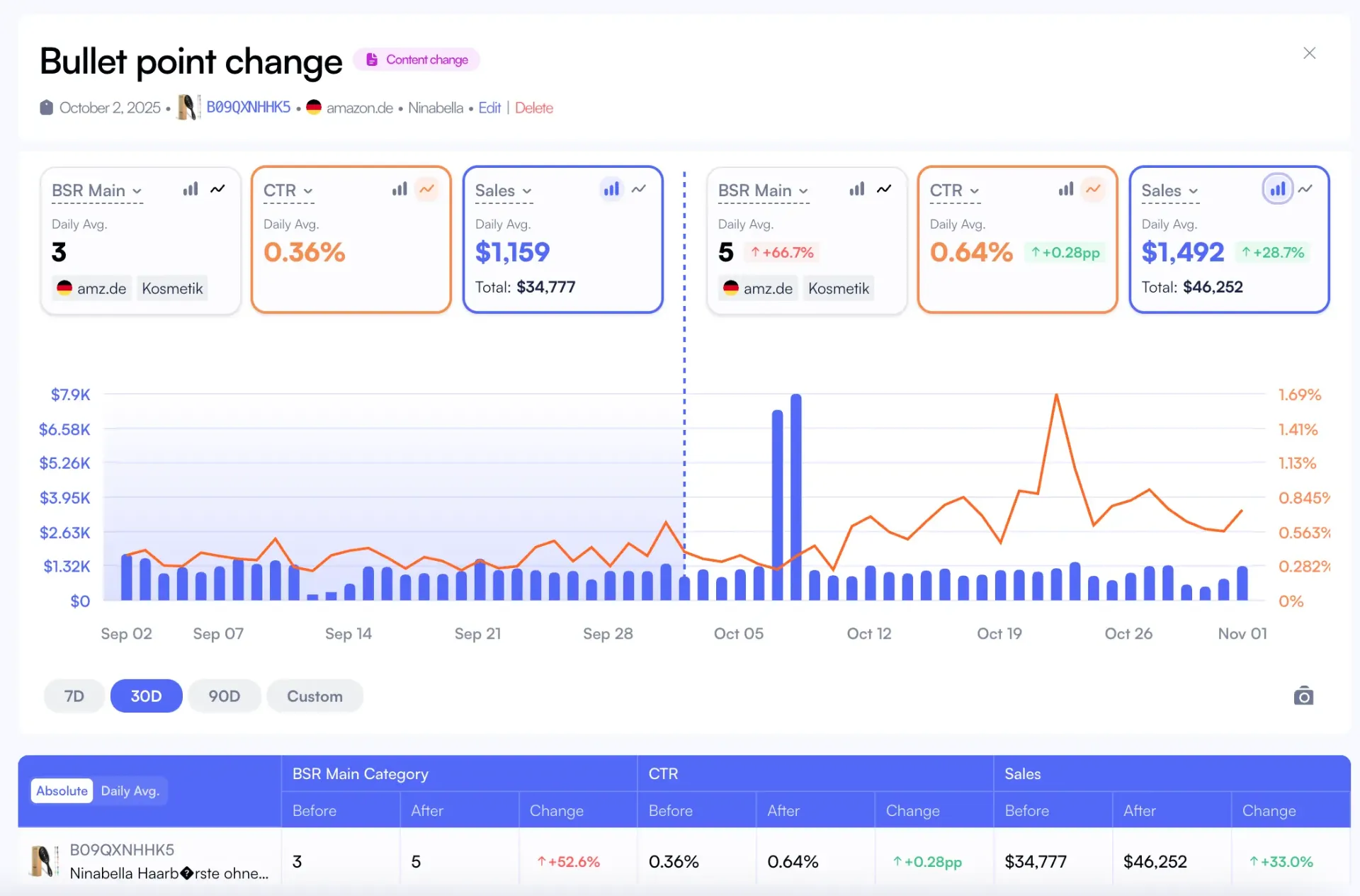
Nova's A/B Testing feature tracks listing experiment results beyond what Amazon's Manage Your Experiments shows.
Understanding Amazon's A10 algorithm
Amazon's A10 algorithm determines which products appear in search results and in what order. Unlike Google, which prioritizes backlinks and authority, A10 cares about one thing: sales velocity and conversion performance. Products that convert searchers into buyers get rewarded with higher rankings, creating a flywheel effect.
Sales velocity weight in A10
Relevance and keywords
Customer satisfaction metrics
Pro Tip: A10 vs A9 Changes in 2026
Amazon's A10 algorithm continues to reduce the weight of external traffic and lean harder on customer satisfaction signals (reviews, return rate, seller feedback) into 2026, with conversational AI surfaces like Rufus reading the same trust signals. The practical implication: off-Amazon PPC contributes less to ranking than optimizing your listing to convert Amazon's native traffic.
Step 1: Keyword research for high-converting terms
Most sellers stuff listings with irrelevant keywords, hoping to rank for everything. Smart sellers target 3-5 primary keywords with high search volume and buyer intent, then layer in 10-15 secondary terms. Effective keyword research balances volume, competition, and conversion probability.
Keyword Research Methodology
Keyword Targeting Framework
- •Primary keywords (3-5 total): High volume (10K+ searches/mo), high relevance, goes in title and bullets
- •Secondary keywords (10-15 total): Medium volume (1K-10K/mo), goes in bullets, description, backend
- •Long-tail keywords (20-30 total): Low volume but high conversion, backend search terms only
Step 2: Title optimization formula
Your title serves two masters: Amazon's algorithm (keyword density) and human buyers (readability and appeal). Titles with 150-180 characters (fully using Amazon's limit) rank better than short titles, but only if they remain readable.
Winning Title Formula
Structure: [Brand] + [Primary Keyword] + [Key Feature] + [Use Case] + [Size/Specs]
Example (Home & Kitchen):
Breakdown:
- •Brand: NovaCook (builds recognition)
- •Primary keyword: Stainless Steel Mixing Bowls (12,000/mo searches)
- •Feature: Set of 5, Nesting (differentiator)
- •Use case: Baking, Cooking, Salad (captures related keywords)
- •Specs: Sizes listed, Dishwasher Safe (buyer decision factors)
Title Optimization Mistakes to Avoid
- ✗ALL CAPS TITLES: Amazon's TOS violation, can get suppressed
- ✗Promotional language: "Best," "Top Rated," "Sale" not allowed in titles
- ✗Keyword stuffing: "Yoga mat yoga mat for yoga" kills readability, doesn't help ranking
- ✗Irrelevant keywords: Adding "for men women kids" to every listing dilutes relevance
Step 3: Bullet points that sell (features → benefits)
Bullet points are where you convert browsers into buyers. Each bullet should follow the "feature → benefit → proof" structure. Persuasive copywriting principles apply: lead with the benefit, explain the feature, and back it up with specificity.
Bullet Point Formula (5 bullets)
Bullet 1: Primary benefit + main keyword
Bullet 2: Unique feature + secondary keyword
Bullet 3: Versatility + use cases
Bullet 4: Problem-solving feature
Bullet 5: Trust + guarantee
Notice how each bullet: (1) starts with a benefit-focused headline in ALL CAPS, (2) explains the feature with specifics, (3) includes relevant keywords naturally, and (4) uses numbers/data for credibility. This structure ranks and sells simultaneously.
Step 4: Images that convert at 20%+ rates
Amazon allows up to 9 images. Use all 9. Images drive 65-70% of the purchase decision. User experience research shows that clear, detailed product images increase conversion rates significantly compared to low-quality photos.
Optimal Image Sequence (9 slots)
Image Optimization Best Practices
- •Professional photography: Invest $300-500 in pro images. Amateur photos kill conversion.
- •Infographic text: Use 60-80pt font minimum for readability on mobile (70% of traffic)
- •Consistent branding: same color scheme, font style across all images builds trust
- •Test image order: Use Amazon's Manage Your Experiments to test different image sequences
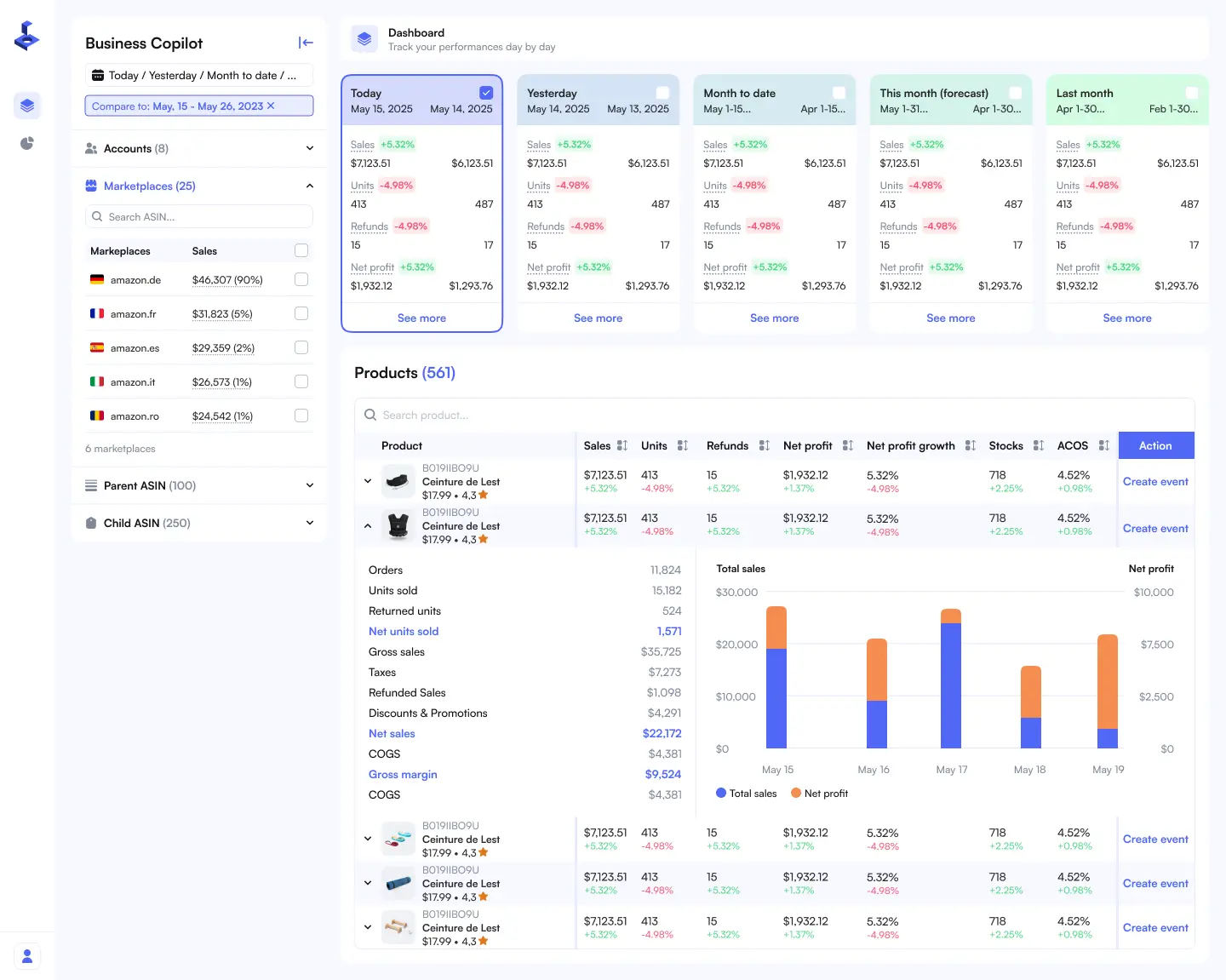
Track listing performance over time with Nova's Products Feed to see which optimization changes drive results.
Step 5: A+ Content (Enhanced Brand Content)
A+ Content is available to brand-registered sellers. Amazon's internal data shows that listings with A+ Content see 3-10% higher conversion rates and 5-8% increase in traffic. It doesn't directly impact ranking, but better conversion = more sales velocity = indirect ranking boost.
Effective A+ Content Structure
Step 6: Backend search terms (the hidden ranking boost)
Backend search terms are indexed by Amazon but invisible to customers. You get 249 bytes (characters) to stuff additional keywords without cluttering your listing. Amazon's guidelines are clear: no duplicate keywords, no competitor brand names, no abuse.
Backend Keyword Strategy
- →No repetition: If "stainless steel bowl" is in your title, don't repeat in backend
- →Use synonyms: "mixing bowl" in title → "prep bowl" "baking bowl" "salad bowl" in backend
- →Misspellings: Include common misspellings (e.g., "excersize" for exercise products)
- →Abbreviations: "stainless steel" → also add "ss" if relevant to your niche
- →No punctuation needed: Amazon ignores commas/spaces in backend, just separate with space
Step 7: Reviews optimization (quantity + quality)
Reviews are both a conversion factor (social proof) and a ranking signal. Products with 100+ reviews convert 2-3x better than those with under 20 reviews. Research shows 89% of consumers read reviews before purchasing, and 4+ star rating is the minimum threshold for consideration.
Ethical Review Acceleration Strategies
- •Amazon Vine: Enroll products to get 15-30 early reviews from verified reviewers
- •Request a Review button: Use Seller Central's automated request (4-14 days post-delivery)
- •Product inserts: QR code linking to "Contact Us" page (NOT direct review solicitation, against TOS)
- •Respond to negative reviews: Professional, helpful responses show you care (improves conversion)
Never Do These (TOS Violations)
- ✗Incentivized reviews (gift cards, discounts in exchange for reviews)
- ✗Review swaps with other sellers
- ✗Paying for reviews through third-party services
- ✗Family/friends reviewing your product
Step 8: A/B testing your listing scientifically
Amazon's "Manage Your Experiments" tool lets you test titles, images, and A+ Content variations. Systematic A/B testing is how top sellers compound improvements. A 2% conversion lift from better images + 1.5% from title optimization = 3.5% total, which means 3.5% more revenue with zero additional traffic.
A/B Testing Priority Order
Run tests for minimum 4-6 weeks or until statistical significance (95% confidence). Never test multiple elements simultaneously, isolate variables.
Real optimization case study: 47% conversion increase
Kitchen Gadget Seller: $18K → $31K Monthly Revenue
Starting point: 11.2% conversion rate, 4.3 star rating, 87 reviews, ranking #15 for main keyword
- →Week 1-2: Keyword research revealed they were missing 3 high-volume terms. Updated title and bullets.
- →Week 3-4: Hired pro photographer, replaced all 7 images with optimized sequence (lifestyle, infographics, scale)
- →Week 5-8: Enrolled in Vine, got 18 new reviews (16 five-star)
- →Week 9-12: Created A+ Content with brand story, comparison chart, use cases
Results after 90 days: 16.5% conversion rate (+47% increase), 4.6 star rating, 134 reviews, ranking #4 for main keyword, organic sales up 72%.
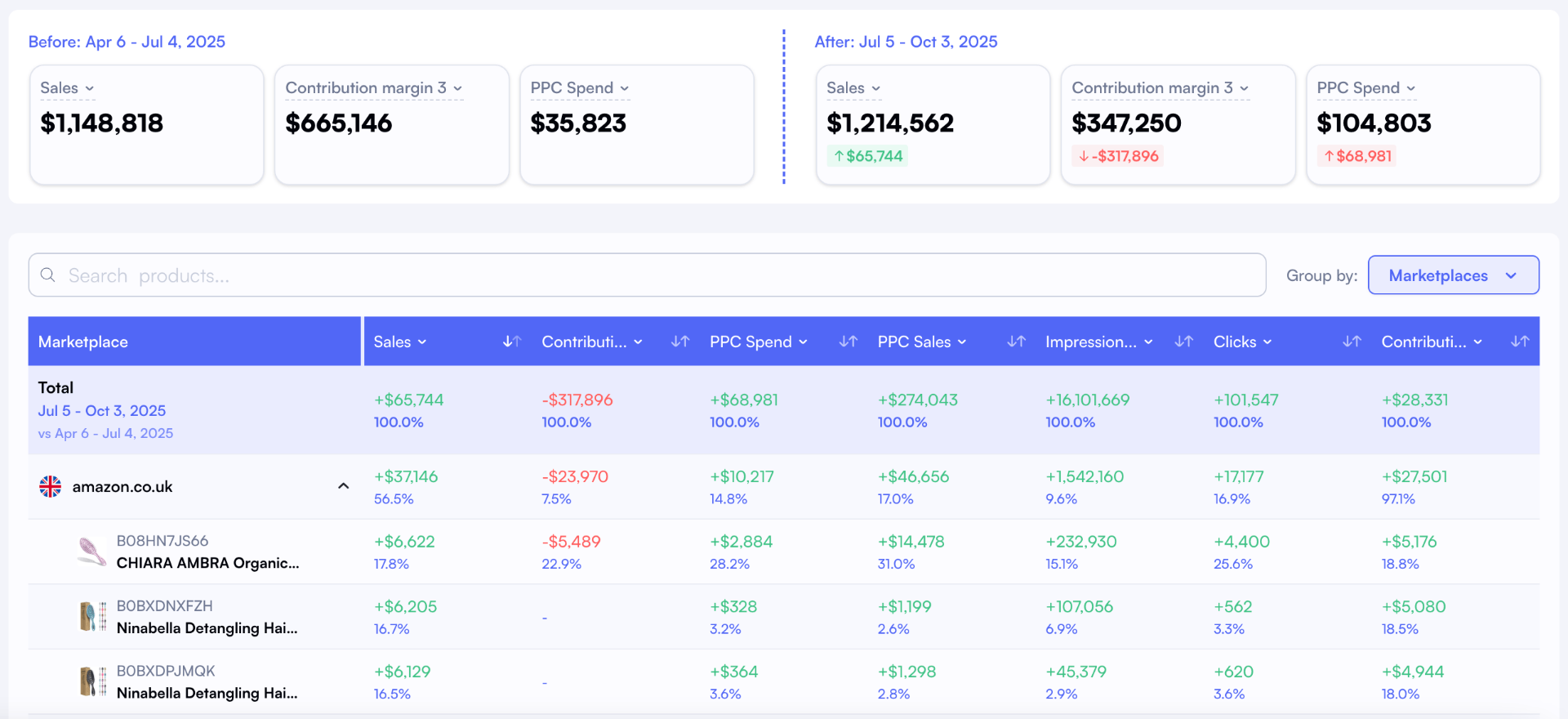
Nova's Winners & Losers feature helps you identify which optimized listings are driving profit so you can prioritize future optimization efforts.
Complete listing optimization checklist
Optimize Listings with Data-Driven Insights
Use Nova's analytics to identify which listings need optimization and track performance improvements over time.
Making optimization a continuous habit
Listing optimization isn't a one-time project. It's a continuous improvement system. The sellers who dominate page 1 audit their listings quarterly, test variations monthly, and respond to market changes weekly. Product feed monitoring tools help you track ranking and conversion trends systematically.
Start with your highest-revenue SKU. Apply this framework: keyword audit → title optimization → bullet refresh → image upgrade → A+ Content → A/B testing. Then move to your next SKU. Within 6-12 months, you'll have a catalog that ranks, converts, and compounds organic sales without increasing PPC spend.
For FBA sellers Managing multiple ASINs, this systematic approach is what separates sustainable growth from random acts of marketing.
Sources & References
Copyblogger: How to Create Product Pages, Persuasive copywriting principles for e-commerce product descriptions and bullet points.
Nielsen Norman Group: How People Read Online, User experience research on reading patterns and visual attention for product images.
Amazon: A+ Content Design Guide, Official Amazon guide for A+ Content design tips, guidelines, and examples.
Amazon: Keyword Research Guide, Official Amazon guide on how to research and use keywords for product visibility.
BrightLocal: Consumer Review Survey 2025, Research on how reviews influence purchase decisions and the importance of star ratings.
Continue Learning
Explore more expert insights to grow your Amazon business
Amazon Pricing Strategy
Pricing is the highest-leverage profit lever most sellers never revisit. Learn the 4 pricing models, how to A/B test prices, and how to track the actual profit impact of every price change.
Amazon FBA Profit Margins by Category (2026 Benchmarks)
What's a good FBA profit margin? See 2026 benchmarks by category, the real formula (not the simplified version), and 8 strategies that added 5-12% margin for real sellers.
Amazon Inventory Management 2026: Cash Flow Strategies
Master Amazon FBA inventory management to prevent stockouts, optimize cash flow, and avoid storage fees. Complete guide to forecasting and reorder systems.