Amazon Rufus Impact on Sellers: AI Analytics Strategy 2026
Amazon Rufus changes how buyers shop. Learn how to track AI-driven behavior shifts, optimize for conversational search, and adapt your analytics strategy.
Download our free 8-step PDF checklist with actionable tactics to optimize your listings for Amazon's AI shopping assistant. Use the short checklist as a practical starting point.
Latest updates
Reviewed September 2026
Rufus is now a default surface: it ships in the Amazon shopping app and on desktop search, so conversational queries are no longer an experimental edge case. Plan for them in every category brief.
Attribute completeness still wins: products with full structured attributes (material, use case, certifications) outperform keyword-stuffed listings, and Nova's Seller Cockpit flags missing fields per ASIN so it is fixable in one pass.
Catch the shift fast: pair listing experiments with profit & loss analytics and Custom Breakdowns to answer "what changed this week" inside an hourly refresh window.
Amazon Rufus represents the most significant shift in e-commerce search since Amazon launched in 1994. Instead of typing keyword strings, shoppers now ask conversational questions like "What's the best stainless steel water bottle for hiking under $30?" The AI interprets intent, evaluates product fit, and surfaces recommendations based on comprehensive understanding rather than keyword matching.
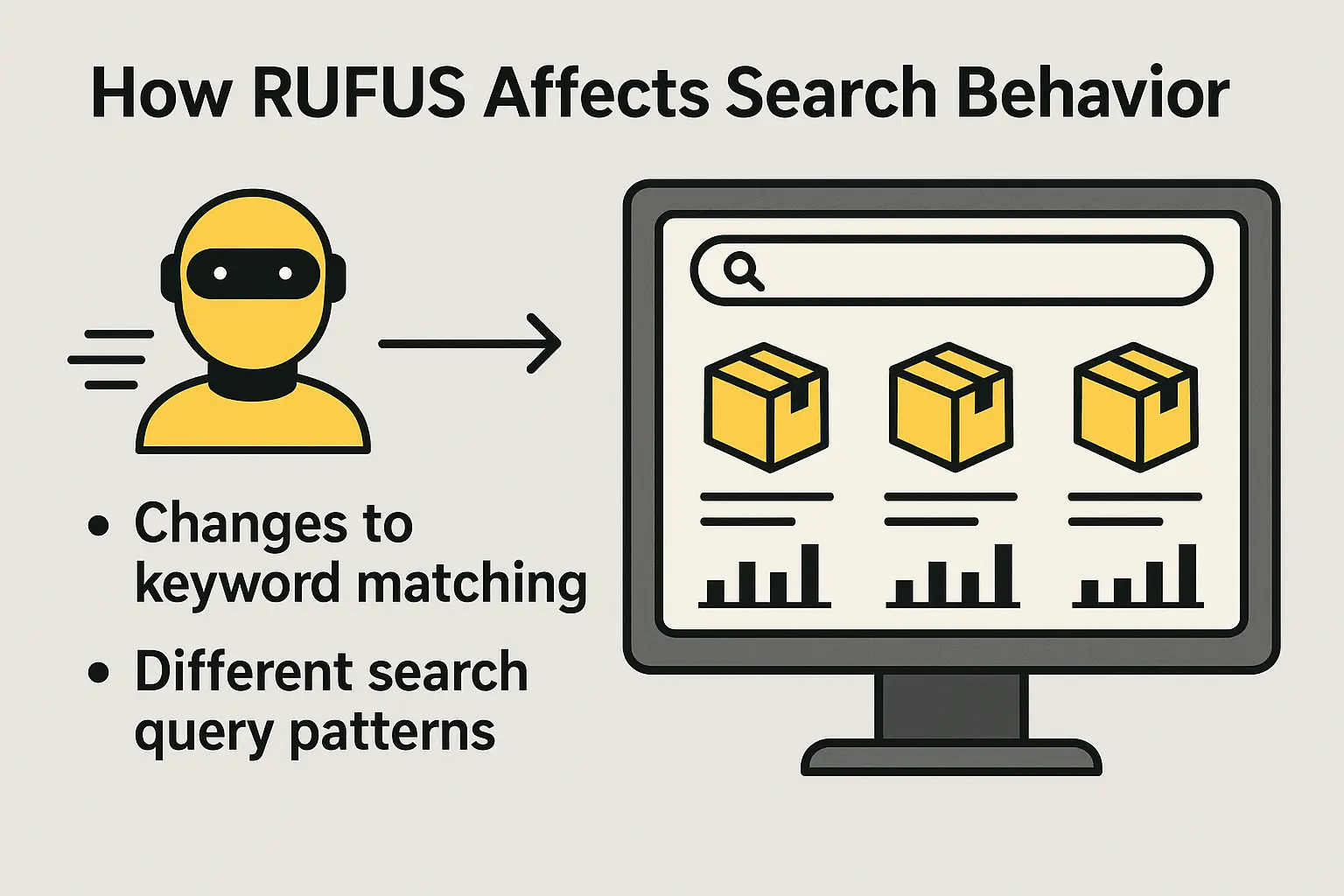
This changes everything for sellers. Your keyword-optimized listings may not match AI evaluation criteria. Your conversion patterns will shift as Rufus sends traffic with different intent. Your competitive positioning depends on factors beyond traditional SEO.
This guide explains how Rufus actually works, identifies specific impacts on seller metrics, and provides actionable optimization strategies based on early data from sellers adapting to AI-driven discovery.
What is Amazon Rufus and How Does It Work?
Amazon launched Rufus in February 2024 as a generative AI shopping assistant powered by large language models. It is now a default surface in the shopping app and on desktop. Amazon says more than 250 million customers have used it.
How Rufus Processes Queries
Unlike traditional keyword search that matches text strings, Rufus uses natural language processing to understand buyer intent. When someone asks "What protein powder helps with muscle recovery after intense workouts?", Rufus:
Interprets context: Understands "muscle recovery" and "intense workouts" signal post-workout nutrition needs
Evaluates products: Analyzes product attributes, ingredients, reviews, and Q&A content
Weighs relevance: Prioritizes products with high protein content, fast absorption, and positive recovery-related reviews
Presents recommendations: Surfaces products that best match the interpreted need, not just keyword matches
Industry research on AI adoption in e-commerce shows AI-powered personalization and conversational interfaces are seeing rapid adoption, particularly among mobile-first shoppers under 40 who expect intelligent, contextual recommendations.
Market Penetration
On the Q1 2026 earnings call Amazon said Rufus monthly active users were up 115% year on year, with engagement up around 400%. Sellers report the effect concentrated in categories where product differentiation matters, such as electronics, beauty, supplements and home goods, rather than uniformly across a catalog.
According to National Retail Federation research on retail AI trends, conversational commerce represents one of the fastest-growing segments in e-commerce, fundamentally changing how consumers discover and evaluate products. Sellers reporting Rufus impact typically see it concentrated in specific product categories rather than uniformly across their entire catalog.
What Makes Rufus Different from Traditional Search
Aspect
Traditional Search (A10)
Rufus AI
Query Type
Keyword strings
Natural language questions
Matching Logic
Text matching + relevance scoring
Intent interpretation + context evaluation
Ranking Factors
Keywords, sales velocity, conversion rate
Attribute fit, review sentiment, Q&A depth, use-case match
Content Evaluation
Title and backend keywords primarily
Title, bullets, A+, Q&A, reviews, attributes
Buyer Journey
High intent, knows what they want
Mixed intent, exploring options
The Rufus Analytics Blind Spot
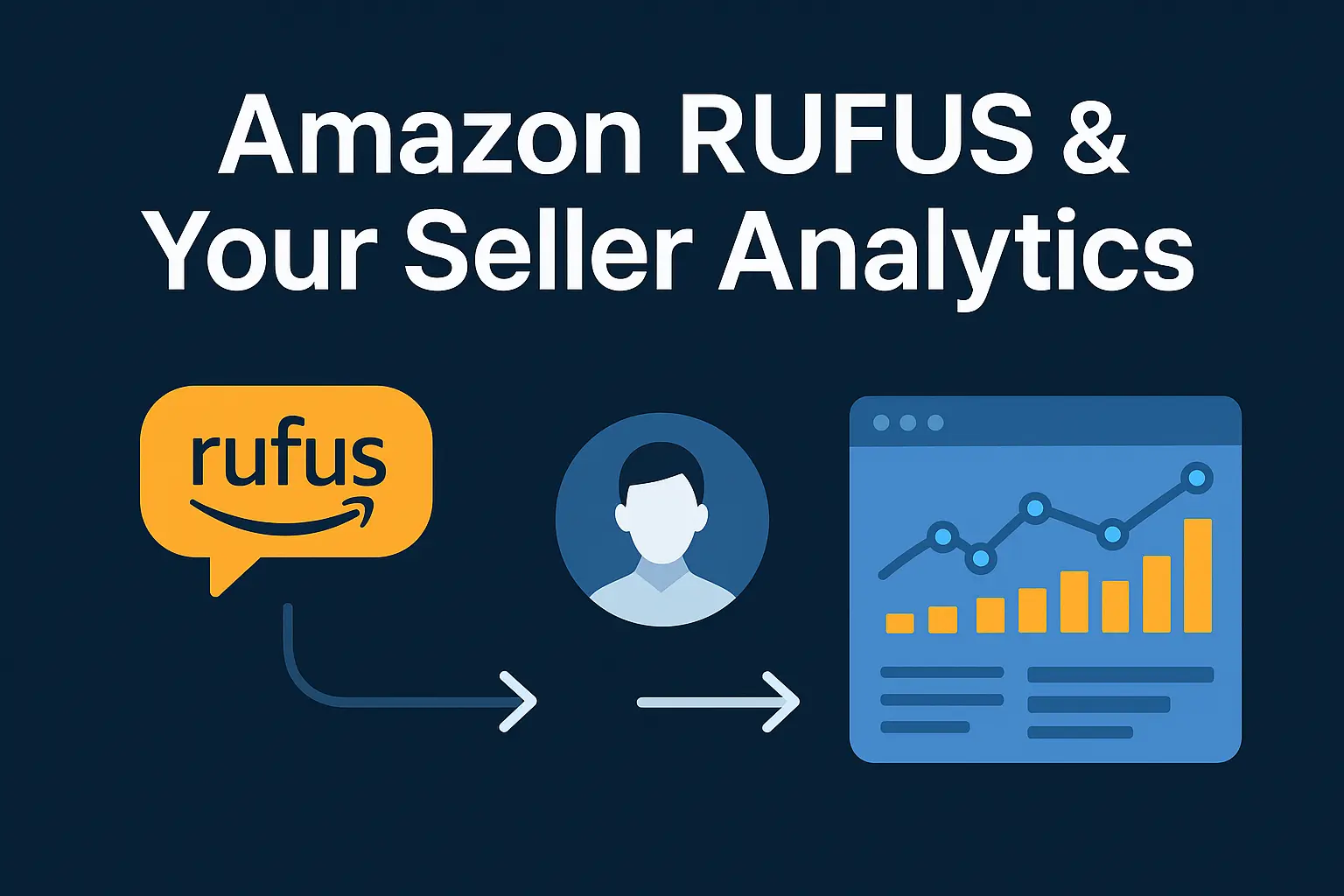
Amazon Seller Central does not currently provide Rufus-specific traffic attribution. All sessions appear aggregated in standard reports, making it difficult to isolate AI-driven discovery from traditional keyword search.
What You Can't See in Seller Central
Traffic source breakdown: which sessions came from Rufus recommendations vs keyword search
Attribute evaluation patterns: which product attributes Rufus weighted most heavily for your listings
Intent divergence: How AI-driven buyer intent differs from keyword search intent
Conversion funnel differences: How Rufus-referred traffic behaves compared to organic search
Competitive positioning: Why Rufus recommends competitors over your products for specific queries
Advanced sellers use performance tracking tools to identify which products are gaining or losing momentum, helping detect AI-driven shifts faster than aggregate metrics alone.
Real Example: Beauty Brand Discovery
A skincare brand noticed conversion rates dropping 12% over three weeks despite traffic increasing 8%. Seller Central provided no explanation.
Deeper investigation revealed the timing aligned with Rufus rollout in their category. Products Rufus recommended had 40% lower conversion because AI was matching them to exploratory queries ("what's the best anti-aging serum?") rather than high-intent searches ("retinol serum 0.5%").
The brand adjusted listing focus to better match exploratory intent and recovered conversion within two weeks.
Research on AI-driven customer experiences highlights growing challenges as AI systems make recommendations without exposing evaluation logic to affected businesses, creating "intelligent experience engines" that reshape buyer behavior.
7 Ways to Detect Rufus Impact on Your Products
1. Monitor Conversion Rate vs Traffic Correlation
Track whether conversion rates hold steady as traffic increases. Traditional growth sees traffic and conversions rise together. Rufus impact often shows as traffic increases while conversion rate declines.
Calculate your conversion rate daily for 30 days using real-time performance dashboards. Plot it against daily sessions. If you see sustained divergence (traffic up 10%+, conversion down 8%+), investigate whether Rufus is sending different buyer intent than keyword search historically delivered.
Diagnostic Tip
Single-day fluctuations are normal. Look for sustained patterns over 7-14 days that coincide with increased traffic from sources you can't attribute to your marketing efforts.
2. Segment Performance by Product Attribute
Rufus evaluates products by specific attributes (material, certification, size, use case) more than traditional search does. Group your catalog by shared attributes using product tagging systems to identify which characteristics Rufus prioritizes.
For example, tag products by material type (stainless steel, plastic, glass), then compare performance trends. If one material segment shows divergent traffic or conversion patterns, Rufus may be preferentially recommending that attribute.
Case Study: Supplement Brand Certification
A supplement brand tagged their 45-SKU catalog by certification type (NSF, GMP, USDA Organic, None). Over six weeks, NSF-certified products gained 23% more traffic while conversion rates held steady. Non-certified products saw flat traffic despite similar PPC spend.
Hypothesis: Rufus prioritizes certification when answering quality-focused queries. The brand emphasized NSF certification in titles and A+ content for remaining products, seeing incremental traffic gains within three weeks.
3. Track Review Sentiment Changes
Rufus summarizes reviews for shoppers, weighting recent sentiment heavily. A cluster of negative reviews can hurt AI recommendations more than traditional rankings because Rufus actively interprets and presents sentiment analysis.
Monitor review velocity (reviews per day) and sentiment trends. If you receive 5-7 negative reviews in a short period, expect Rufus to surface those patterns in recommendations, even if your overall star rating remains strong.
AI shopping assistants prioritize contextual relevance and recent sentiment over traditional aggregate metrics when generating recommendations.
4. Measure Session Behavior Shifts
AI-driven traffic often shows different engagement patterns than keyword search. Shoppers using Rufus may browse more pages, spend longer in session, but convert at lower rates if they're in exploratory mode rather than purchase mode.
Track these metrics weekly:
Average session duration
Pages per session
Bounce rate
Add-to-cart rate vs final purchase rate
If you see sessions getting longer with more page views but lower conversion, Rufus may be sending exploratory shoppers who need more education before purchasing.
5. A/B Test Listing Content Styles
Test whether keyword-heavy titles perform better or worse than benefit-focused, natural language titles using A/B testing tracking. Rufus may favor different content styles than traditional A10 search algorithm.
Test A (Keyword-focused): "Stainless Steel Water Bottle Insulated Vacuum 32oz BPA Free"
Test B (Benefit-focused): "Insulated Water Bottle Keeps Drinks Cold 24 Hours - Perfect for Hiking, Gym, Office - Leakproof 32oz"
Run each version for 2-3 weeks, comparing traffic quality and conversion rates. The version that drives better overall performance indicates which content style Rufus prioritizes for your category.
Testing Insight
Many sellers find that natural language, benefit-focused content outperforms keyword-stuffed titles when Rufus drives significant category traffic. But test in your specific category - results vary by product type and buyer behavior patterns.
6. Monitor Competitive Visibility Patterns
Track when your products lose visibility despite stable keyword rankings. If competitors gain traffic share while your keyword positions hold steady, Rufus may favor their listings based on attributes or content depth you haven't matched.
Analyze competitor listings that Rufus appears to favor. Look for:
More comprehensive A+ content with use-case imagery
Complete product attribute data (check for gaps in your listings)
Higher review counts or better recent sentiment
Detailed Q&A sections answering common questions
Benefit-focused language in titles and bullets
7. Set Up Performance Anomaly Alerts
Establish baseline metrics for normal performance, then configure alerts for significant deviations. Useful thresholds:
10%+ conversion rate decline over 7 days
15%+ traffic increase without proportional conversion increase
Quick detection allows faster response. Companies that detect and respond to AI-driven market shifts within 24-48 hours maintain competitive advantages that compound as agentic systems reshape shopping behavior.
Rufus adoption
+115%
Year on year growth in Rufus monthly active users, reported by Amazon for Q1 2026
Conversion Impact
-30% to +25%
Conversion rate change range observed in early Rufus case studies depending on listing optimization
Detection Window
7-14 Days
Typical timeframe to identify sustained Rufus impact vs normal performance variance
How to Optimize Listings for Rufus Discovery
Write Natural Language Titles
Rufus interprets natural language better than keyword strings. Compare these approaches:
Traditional: "Insulated Water Bottle Stainless Steel 32oz BPA Free Vacuum"
Rufus-Optimized: "Insulated Water Bottle Keeps Drinks Cold 24 Hours, Hot 12 Hours - Leakproof Stainless Steel for Hiking, Travel, Office - 32oz"
The second version answers implicit questions ("how long does it stay cold?", "will it leak?", "what can I use it for?") that Rufus evaluates when matching products to conversational queries.
Answer Questions in Bullet Points
Structure bullets to directly answer common "best for" and "how to" questions:
❌ Weak: "Double-wall vacuum insulation"
✓ Strong: "Keeps coffee hot for 12 hours and iced drinks cold for 24 hours - perfect for all-day outdoor adventures, long commutes, or office use"
The stronger version provides context Rufus uses to match your product to specific use-case queries.
Maximize A+ Content Depth
Rufus evaluates all visible content, not just backend keywords. Rich A+ content helps AI understand your product's fitness for specific needs:
Comparison charts showing your product vs alternatives
Use-case imagery demonstrating product in context
Detailed specifications formatted for easy scanning
Size guides, compatibility information, care instructions
Proactively Manage Q&A
Rufus pulls heavily from product Q&A to answer buyer questions. Don't wait for customers to ask - post and answer the top 10 questions yourself:
"Is this dishwasher safe?"
"What's the best way to clean this?"
"Does it fit standard car cup holders?"
"Can I put carbonated drinks in this?"
"How do I prevent condensation on the outside?"
Complete Q&A sections help Rufus confidently recommend your product for specific use cases.
Maintain Review Quality
Respond to negative reviews quickly and professionally. Rufus evaluates sentiment trends, and active review management signals product quality and seller responsiveness. Learn more strategies in our complete FBA guide.
Encourage detailed, use-case-specific reviews rather than generic "great product" feedback. Reviews mentioning specific scenarios help Rufus match your product to similar queries.
Complete All Attribute Fields
Fill every available product attribute in Seller Central's catalog form. Rufus uses structured data extensively. Missing attributes mean missed opportunities when AI tries to match your product to specific buyer criteria.
Pay special attention to:
Material composition
Dimensions and capacity
Certifications (NSF, FDA, organic, etc.)
Care instructions
Recommended uses
Target audience
Core Principle
Rufus optimization isn't about gaming an algorithm. It's about providing comprehensive, benefit-focused product information that genuinely helps AI understand your product's value and appropriate use cases. Write for humans explaining their needs conversationally, and Rufus will better match your products to relevant queries.
Research from Baymard Institute on e-commerce product page UX shows that comprehensive product information increases conversion rates across all traffic sources by 15-30%, with AI-driven discovery showing even higher sensitivity to content depth and structured data completeness.
Real Seller Experiences: Adapting to Rufus
Kitchen Goods Seller: Material-Based Divergence
Situation: 15-20 SKU kitchen goods seller noticed 14% conversion rate decline over three weeks coinciding with category traffic surge they couldn't attribute to marketing.
Discovery: Segmented catalog by material (stainless steel, plastic, silicone). Stainless steel products maintained stable conversion. Plastic products dropped 28%.
Hypothesis: Rufus prioritizes material quality when answering "best" or "durable" queries, steering quality-conscious shoppers toward metal products.
Actions Taken:
Enhanced stainless steel messaging in titles ("premium 18/8 stainless steel")
Added material comparison charts to A+ content
Emphasized durability benefits in bullet points
Posted Q&A addressing material quality questions
Results: Stainless steel SKU conversion recovered to baseline within 2 weeks, then climbed 6% above pre-Rufus levels as AI recommendations increased qualified traffic.
Discovery: Products with detailed Q&A sections (10+ answered questions) had 19% higher conversion than products with sparse Q&A (fewer than 5 answers). The gap widened over six weeks.
Hypothesis: Rufus relies heavily on Q&A content to answer buyer questions about dosage, timing, interactions, and use cases. Sparse Q&A means AI can't confidently recommend products for specific scenarios.
Actions Taken:
Systematically posted and answered top 10 questions for all high-volume SKUs
Focused on questions about dosage, timing, ingredients, and specific use cases
Encouraged customers to post detailed reviews mentioning use scenarios
Results: Portfolio conversion improved 8% within 6 weeks as Q&A completion helped Rufus make better product-to-query matches.
Beauty Brand: Intent Mismatch Adjustment
Situation: Skincare brand couldn't determine whether conversion changes were seasonal or Rufus-related because patterns looked unusual compared to prior years.
Discovery: Year-over-year comparison showed similar seasonal traffic patterns but 16% lower conversion vs same period previous year. Timing aligned with Rufus rollout in beauty category.
Hypothesis: Rufus sends more exploratory traffic ("what's the best anti-aging serum?") vs high-intent traffic ("buy retinol 0.5%"). Listings optimized for purchase-ready buyers underperformed with exploratory shoppers.
Actions Taken:
Rewrote titles to emphasize benefits over technical specs
Added educational A+ content explaining active ingredients and use cases
Created comparison charts showing product lineup by skin concern
Adjusted PPC to focus on high-intent keywords, letting Rufus handle discovery
Results: Conversion rate recovered partially (8% improvement from low point). PPC efficiency improved significantly with ACoS down 22% by focusing spend on high-intent searches.
Why Monitoring Speed Matters in the Rufus Era
AI algorithms update continuously. Rufus recommendation patterns shift as Amazon trains the model with new customer interaction data. This creates a faster-moving competitive environment than traditional keyword search.
The Compounding Loss Problem
Every day you don't detect a Rufus-driven conversion drop is another day of lost sales. Consider:
Day 1: Conversion drops 12%. You don't see it yet. Loss: $200-500 depending on volume.
Days 2-7: Pattern continues undetected. Loss: $1,400-3,500.
Days 8-14: Still running with impaired conversion. Loss: $2,800-7,000.
By Week 3: Total missed revenue: $6,000-15,000+ depending on volume.
Faster detection means faster response and smaller losses. This becomes more critical as Rufus adoption increases.
Competitive Dynamics
When Rufus changes recommendation patterns, sellers who adapt first maintain visibility. Those who detect changes days or weeks later lose ground while competitors optimize.
Real-time visibility into performance shifts is critical in AI-driven commerce. Companies that monitor metrics continuously rather than daily or weekly can respond to algorithm changes before competitors, maintaining market share and visibility as AI recommendation systems evolve.
Analytics Tool Considerations
Many Amazon analytics platforms refresh data daily. By the time you see a Rufus-related problem, you've lost 24 hours of sales opportunity and competitive positioning.
This baseline helps you identify significant deviations that may signal Rufus impact vs normal variance. Consider implementing profit and loss tracking to understand the financial impact of conversion changes.
Step 2: Set Up Anomaly Detection (Week 2)
Configure alerts for performance changes that warrant investigation:
10%+ conversion rate decline sustained 7+ days
15%+ traffic increase without proportional conversion increase
5+ negative reviews within 48 hours
20%+ bounce rate increase over 14 days
Quick detection enables faster response before losses compound.
A/B test different content approaches to identify what works in your category. For comprehensive testing methodology, explore our advanced optimization strategies:
Keyword-focused vs benefit-focused titles
Feature-list vs use-case-driven bullets
Technical specs vs lifestyle-oriented A+ content
Measure results over 2-3 weeks per test. What works for competitors may not work for your category or buyer demographic.
Frequently Asked Questions
Frequently Asked Questions
Find answers to common questions about our platform
Look for unexplained conversion rate changes that correlate with traffic increases but don't match your keyword ranking performance. Check for shifts in average order value, session duration, and bounce rates. If your historical conversion patterns break without obvious seasonality or competitive changes, Rufus may be driving different buyer behavior to your listings.
No. Amazon does not currently break out Rufus-driven traffic as a separate source in Seller Central reports. All sessions appear aggregated, making it difficult to isolate AI-driven discovery from traditional keyword search without advanced analytics tracking.
Don't abandon keyword optimization - traditional search still drives the majority of traffic. Instead, augment your strategy with natural language content that matches conversational queries. Think about how buyers ask questions verbally: 'best water bottle for hiking in freezing weather' rather than just optimizing for 'insulated water bottle'.
Amazon continuously trains Rufus with new data, similar to how Google updates search algorithms. Recommendation patterns can shift weekly as the AI model learns from billions of customer interactions. This makes near real-time monitoring more valuable than historical trend analysis alone.
Early evidence suggests Rufus heavily weighs material quality, certifications, specific use-case fit, and review sentiment. The AI appears to evaluate 'fitness for purpose' more than keyword density. Products with complete attribute data, detailed specifications, and benefit-focused content perform better in conversational recommendations.
Yes. Natural language, benefit-focused content works for both Rufus and human keyword searches. The key is providing comprehensive product information that answers questions directly rather than keyword stuffing. Fill all attribute fields, maintain strong review ratings, provide detailed A+ content, and write titles that communicate value, not just keywords.
The Rufus Adaptation Imperative
Amazon Rufus represents the future of e-commerce search. Conversational AI will only grow more sophisticated and handle higher traffic percentages. Sellers who adapt now build advantages that compound as adoption increases. For more insights on building a sustainable Amazon business, see our long-term growth strategies guide.
The key isn't gaming an algorithm. It's providing genuinely helpful product information that enables AI to confidently match your products to buyer needs expressed conversationally. Complete attributes, comprehensive Q&A, benefit-focused content, and detailed imagery all help Rufus understand your product's value and appropriate use cases. For deeper insights into analytics strategy, explore our Amazon analytics platform buyer's guide.
Rufus Adaptation Checklist
Establish performance baseline to identify Rufus impact
Set up anomaly alerts for 10%+ conversion or traffic changes
Rewrite titles with natural language and benefit focus
Complete all product attribute fields in catalog
Answer 10+ Q&A questions per high-volume SKU
Expand A+ content with use-case imagery and comparison charts
Monitor review sentiment and respond to negatives quickly
A/B test different content styles to identify category winners
Start with your highest-volume products. Optimize systematically. Monitor results weekly using comprehensive seller dashboards. Rufus impact varies by category, but sellers who adapt proactively maintain visibility as AI adoption keeps compounding through 2026 and beyond.
The sellers who win in the Rufus era will be those who provide comprehensive, genuinely helpful product information that enables AI to confidently match products to buyer needs. This isn't just good for your business - it's better for customers too. Learn more about optimizing your Amazon business strategy in our guides on advertising metrics and profit margin optimization.
Ready to Transform Your Amazon Business?
Join thousands of successful sellers who use Nova Analytics to make data-driven decisions and maximize their profits.

 Claude
 Gemini
 ChatGPT