Fivetran moves data from A to B. But for Amazon, you're paying for generic plumbing and building everything yourself. Nova delivers 700+ metrics with orders and units arriving in real time. No dbt, no data engineers required.
•Fivetran is a generic ETL tool. Its Amazon connectors cover Ads only. Orders, fees, and COGS require custom engineering.
•Nova is an in-browser analytics platform. Connect your Amazon accounts and get 700+ metrics in a ready-to-use dashboard. No warehouse, no modeling, no BI tool needed.
•Total cost of ownership matters. Fivetran requires a warehouse, dbt, and a BI tool on top. Nova replaces that entire stack for Amazon data.
•If you need 500+ connectors across your full stack, Fivetran makes sense. If Amazon is your primary data need, Nova gives you faster insights at a fraction of the cost.
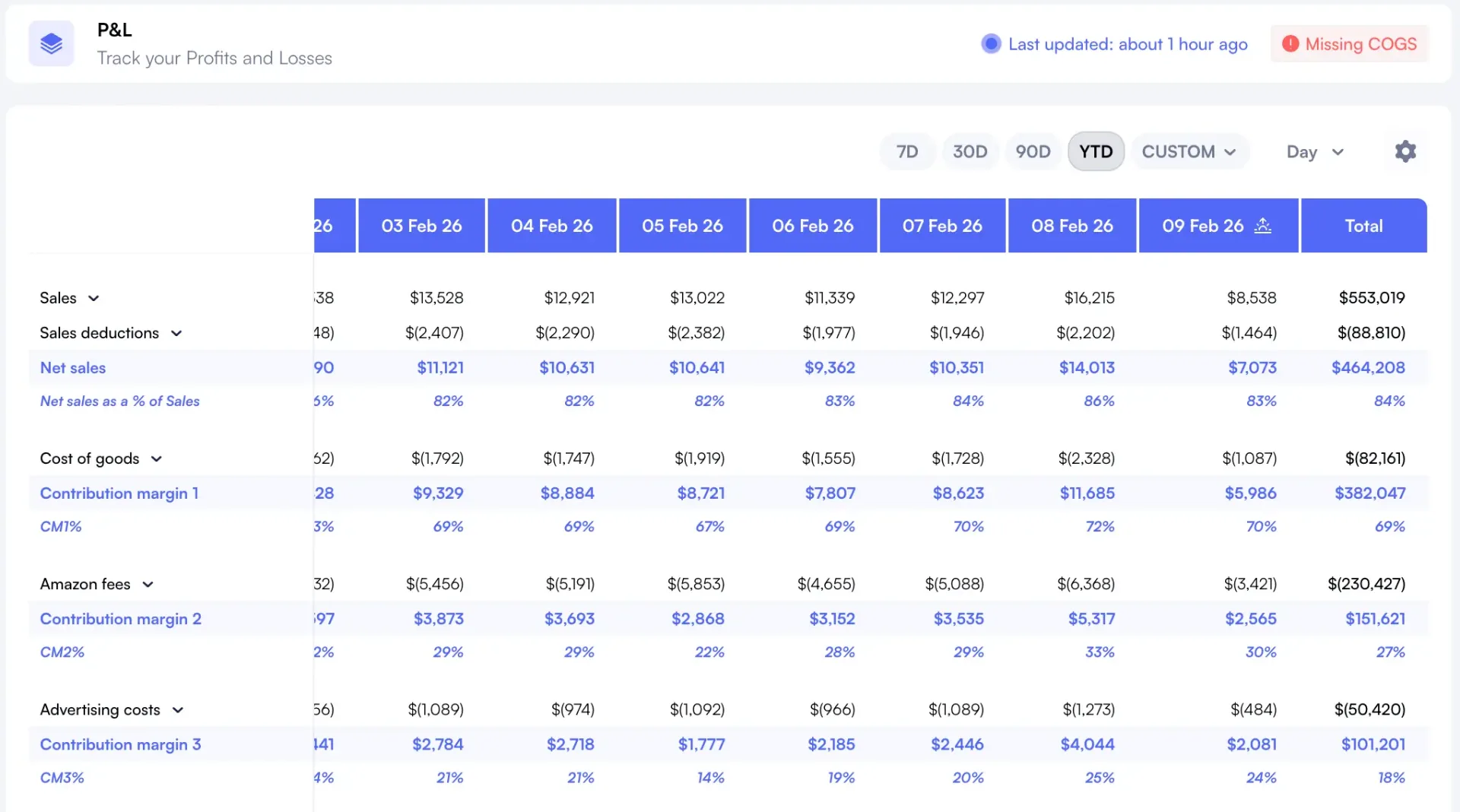
Fivetran moves data from point A to point B. Then you need a warehouse to store it, dbt to model it, and a BI tool to visualize it. That's four tools before you see a single insight. Nova replaces that entire stack for Amazon data with a single in-browser app. Connect your accounts, open your browser, and your P&L is there.
If you manage Amazon data for an agency, aggregator, or multi-brand operation, you've probably evaluated Fivetran. It's the default choice for data teams that already use it across their stack. But "default" doesn't mean "best" for every use case.
We'll cover what Fivetran does well, where it falls short for Amazon specifically, and when Nova's Amazon analytics platform delivers better ROI. No marketing fluff. Just an honest comparison from a team that competes with Fivetran in enterprise deals every week.
What is Fivetran?
Fivetran is an automated data movement platform (commonly called an ETL or ELT tool) founded in 2012. It connects to 500+ data sources and loads raw data into your warehouse (Snowflake, BigQuery, Redshift, Databricks). It's backed by significant venture funding and serves thousands of enterprise customers.
What Fivetran Does Well
500+ pre-built connectors across SaaS, databases, and APIs
Amazon connector covers Ads API only (no Orders, Fees, Settlements)
Raw data requires a warehouse + dbt + BI tool before it's usable
MAR-based pricing scales unpredictably with data volume
No Amazon-specific normalization, dashboards, or KPI calculation
For teams that need to centralize 20+ data sources (Shopify, Google Ads, Salesforce, Amazon), Fivetran is a solid choice. But when Amazon represents 60-80% of your data needs, you're paying for a Swiss Army knife when you need a scalpel.
Where Fivetran Falls Short for Amazon Data
Based on conversations with dozens of agencies and aggregators who evaluated both solutions, here are the five biggest gaps. For the side-by-side view of the two approaches, see the Fivetran alternative for Amazon data.
1. Limited Amazon Coverage
Fivetran's Amazon connector primarily covers the Amazon Ads API. Seller Central data (orders, fees, settlements, returns, inventory) isn't included. You'd need to build separate pipelines for each.
2. Raw Data, No Intelligence
Fivetran delivers raw tables. Amazon has 40+ fee types with cryptic codes, multiple product identifiers (ASIN, SKU, FNSKU), and currency normalization across 23 marketplaces. Your team builds all of this from scratch.
3. Four Tools Instead of One
Fivetran is just the pipe. You still need a warehouse ($500-2,000/mo), dbt for modeling (100-200 hours upfront), and a BI tool like Looker or Tableau ($500-2,000/mo). That's four subscriptions and weeks of setup before anyone sees a dashboard.
4. Pricing That Scales Against You
Fivetran charges by Monthly Active Rows (MAR), as published on their pricing page. Amazon generates a lot of rows across orders, fees, PPC clicks and search terms, so multi-account portfolios sit at the volume end of that model, and the warehouse and BI tool are billed separately on top. Check your own row counts before budgeting.
5. No Domain Expertise
Fivetran moves data, it does not model it. It will not tell you on its own that a "FBAPerUnitFulfillmentFee" changed by 12% last month, or that your true profit margin dropped because of a new referral fee tier. Those answers live in the modeling layer you build on top, or in an Amazon-specific tool that ships it for you.
Quick Comparison: Fivetran vs Nova vs DIY
Here's how the three main approaches to Amazon data stack up:
Capability
Fivetran
Nova
DIY (SP-API)
Amazon Ads Data
Yes
Yes (product-level ad profitability)
Build yourself
Orders & Settlements
No
Yes (order-level)
Build yourself
Amazon Fees (40+ types)
No
Pre-classified
Build yourself
SQP (Search Query Performance)
No
On roadmap
Build yourself
COGS Tracking
No
Built-in per SKU
Build yourself
Built-in Dashboards
No (need BI tool)
Yes (in-browser)
Build yourself
Pre-Built KPIs
0 (raw tables)
200+ ready in-app
Build yourself
Data Refresh
Configurable (extra cost)
Orders in real time (included)
Depends on build
Multi-Marketplace Normalization
No
Auto-normalized (23 marketplaces)
Build yourself
Time to First Insight
Weeks to months
Minutes after connecting
6-18 months
Total Connectors
500+
Amazon-focused
1 (what you build)
Pricing Model
MAR-based (usage)
Flat per-account
Engineering salary
In-App KPIs
200+
Calculated and displayed in your dashboard
Orders and units
Real time
Included in every plan
Marketplaces Covered
21
Auto-normalized across regions
See Nova in Action
Fivetran requires a warehouse, dbt, and a BI tool before you see anything useful. Nova is a complete analytics app you open in your browser. Here's what that looks like for Amazon sellers, agencies, and brand managers:
Full P&L at SKU Level
Every Amazon fee classified and mapped to the right product. Revenue, COGS, ad spend, and 40+ fee types roll up into a true profit and loss statement you can trust. With Fivetran, you'd need a warehouse, dbt models, and a BI tool to even attempt this.
Product-Level Ad Profitability
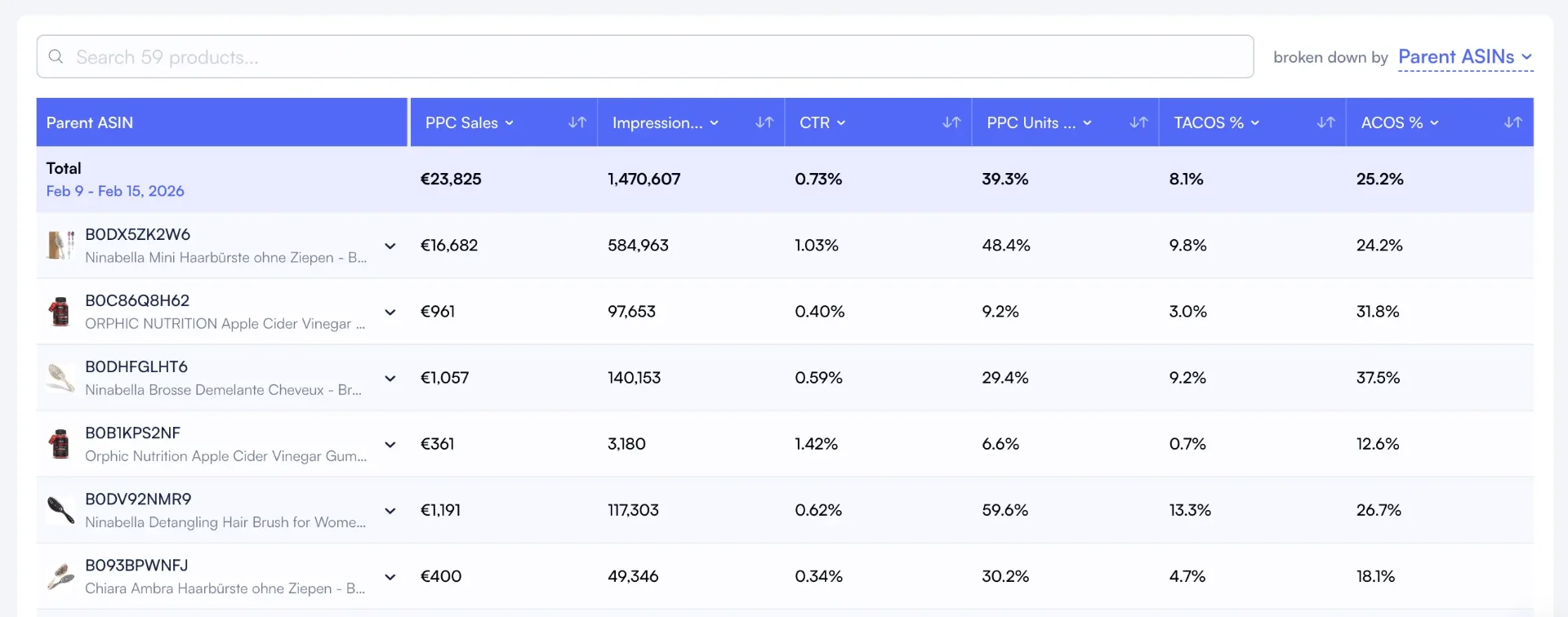
Nova connects PPC spend to actual product profitability. See TACoS, ACoS, and ROAS per product. Fivetran's Amazon Ads connector gives you raw campaign tables in a warehouse. You would still join them with the Selling Partner tables and build the dashboard on top.
Custom Portfolio Breakdowns
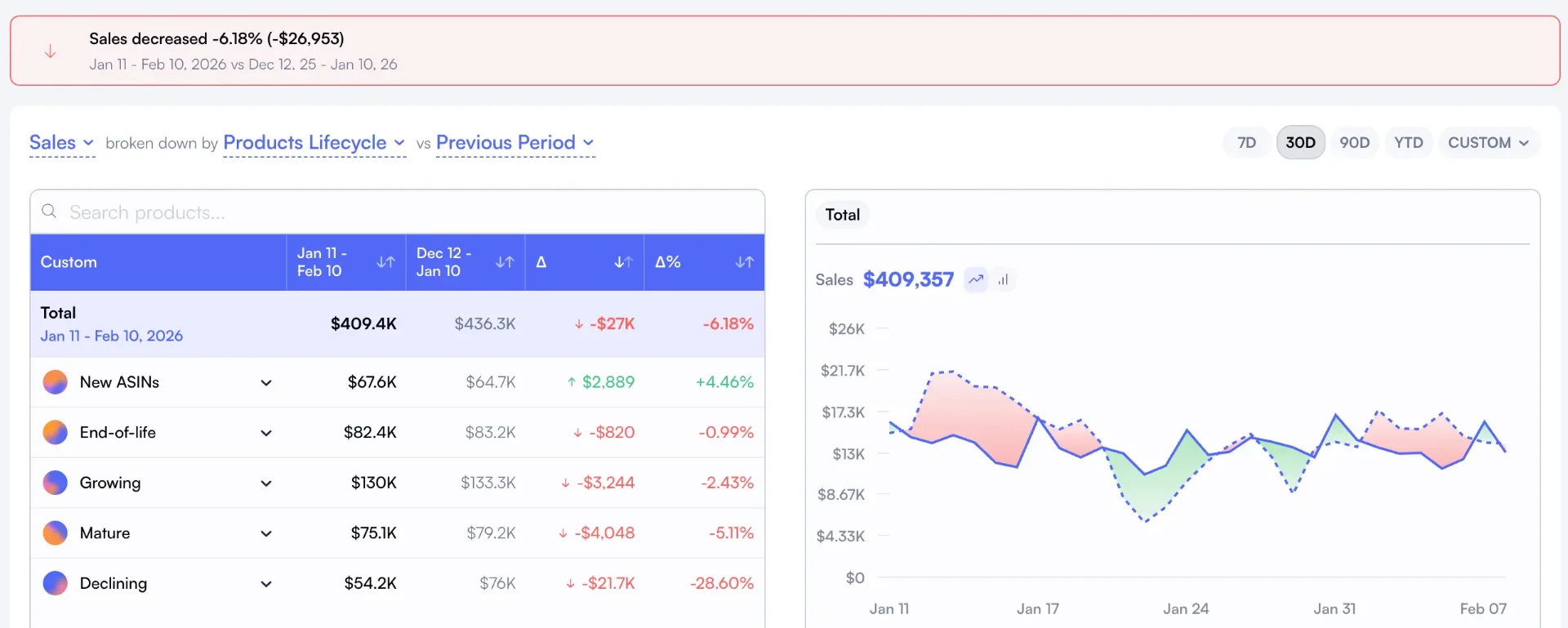
Slice your catalog by brand, supplier, lifecycle stage, price tier, or any custom dimension. Nova's Custom Breakdowns feature lets anyone on your team create these views in the app. No SQL. No dbt. Point-and-click segmentation that a raw data pipeline simply can't offer.
Enterprise Multi-Account Consolidation
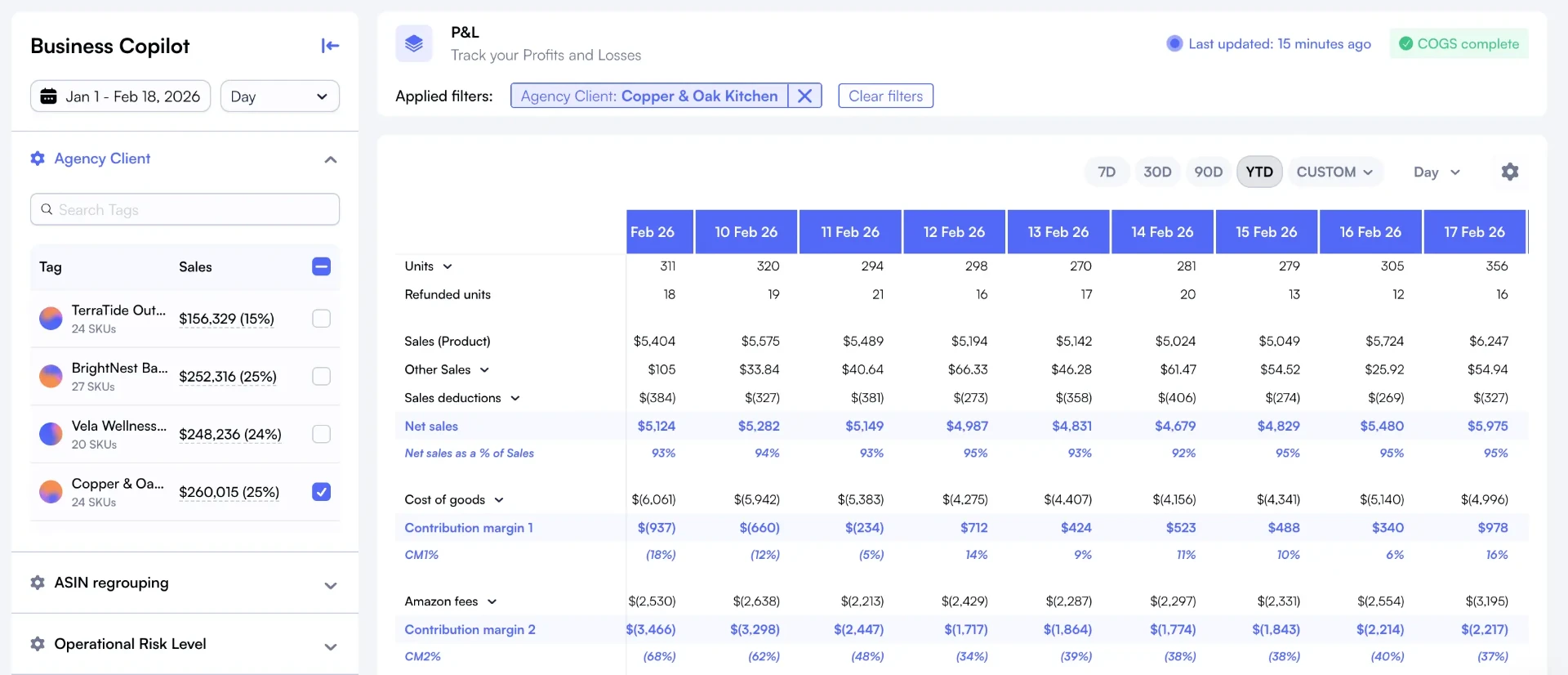
Agencies and aggregators managing 10, 50, or 100+ accounts get a unified P&L across all seller accounts in one dashboard. No spreadsheet stitching. Nova's multi-account consolidation handles currency conversion and marketplace normalization automatically.
Pricing Comparison: Total Cost of Ownership
Subscription price is misleading when comparing Fivetran to Nova. Fivetran is just the pipe. You still need to pay for the warehouse, the modeling, and the dashboards.
Fivetran Stack for Amazon Data
Fivetran connectors: billed on monthly active rows, so it scales with your Amazon volume
Warehouse (Snowflake/BigQuery): $500-2,000/mo
dbt modeling: 100-200 hours upfront ($15K-30K at $150/hr)
If you're currently using Fivetran for Amazon Ads data and want to switch to Nova's all-in-one analytics app, here's the playbook:
1
Connect Your Amazon Accounts
Contact our team and connect your seller accounts via OAuth. Nova starts syncing your data immediately. You'll see your first dashboards within minutes.
2
Explore Your Dashboards
Open Nova in your browser and explore your P&L, PPC analytics, custom breakdowns, and more. Compare Nova's data against your existing Fivetran-powered dashboards to verify accuracy. Nova includes Orders and Fees data that Fivetran never had.
3
Cancel Fivetran's Amazon Connector
Once you're confident in Nova, disable Fivetran's Amazon Ads connector to stop paying MAR fees. Keep Fivetran for your other data sources if needed.
Zero Risk Switch
You can run both Fivetran and Nova in parallel. There's no "switch" moment where you lose data access. Try Nova alongside your existing setup, validate the data, then decide.
Nova also offers data exports for teams that want to combine Amazon data with other sources in their warehouse. Think of it as a bonus, not the core product. Most users never need it because Nova's in-app analytics cover everything.
Frequently Asked Questions
Making Your Decision
Fivetran is a great product for what it does: moving data from hundreds of sources into your warehouse. But for Amazon data, it's just one piece of a four-tool stack. You still need a warehouse, dbt, and a BI tool before anyone on your team sees a single dashboard. If Amazon is the core of the business, the Amazon-native alternative to Fivetran sets out the full stack Nova replaces.
Bottom Line
If Amazon is just one of 50+ data sources feeding your existing data stack, keep Fivetran. If Amazon is your core business, Nova gives you everything you need in a single app: connect your accounts, open your browser, and start making better decisions. No warehouse, no dbt, no BI tool. Just your data, ready to use.
Want to see your own numbers, not a Fivetran feature list?
Book 30 minutes with our team. We connect your Seller Central data and walk through your real profit, fees, and inventory picture, so you can judge the switch on your own catalog. Prefer to explore alone? Start the free trial instead.